When Maria Sharapova walked onto the court at the 2006 US Open wearing a black Nike dress glimmering under the lights, it marked a turning point in tennis fashion.
Adorned with crystals and tailored to perfection, the outfit was more than just sportswear — it was a bold declaration that athletic performance and high style could coexist. Designed by Martin Lotti, then Nike’s creative director for women’s training, the piece became iconic and set the tone for modern tennis apparel.
“That dress helped create the intersection of sport and fashion that defines tennis today,” recalls Lotti, now Nike’s Chief Design Officer. “It looked elegant, but it was engineered for competition. It showed that you don’t have to sacrifice style for performance.”
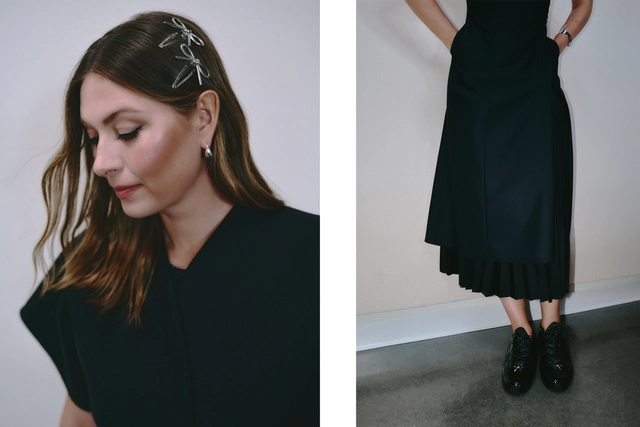
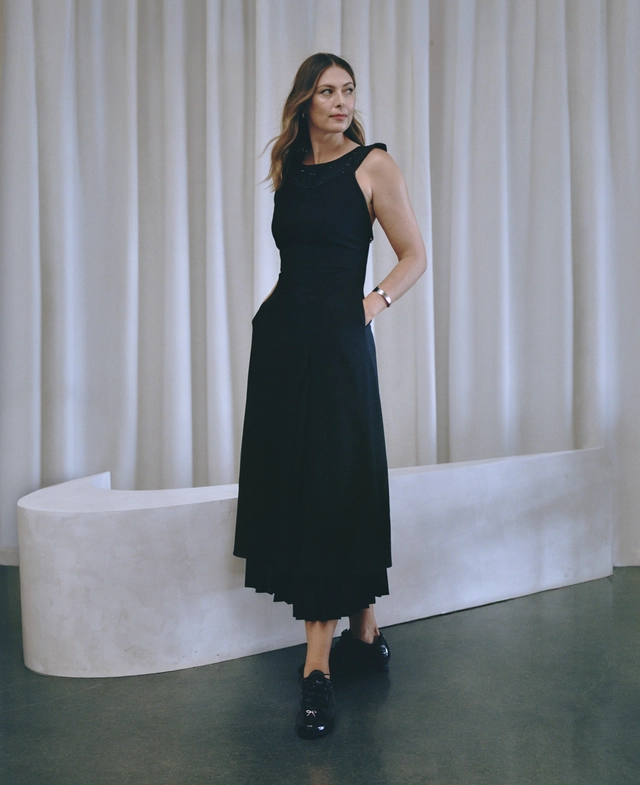
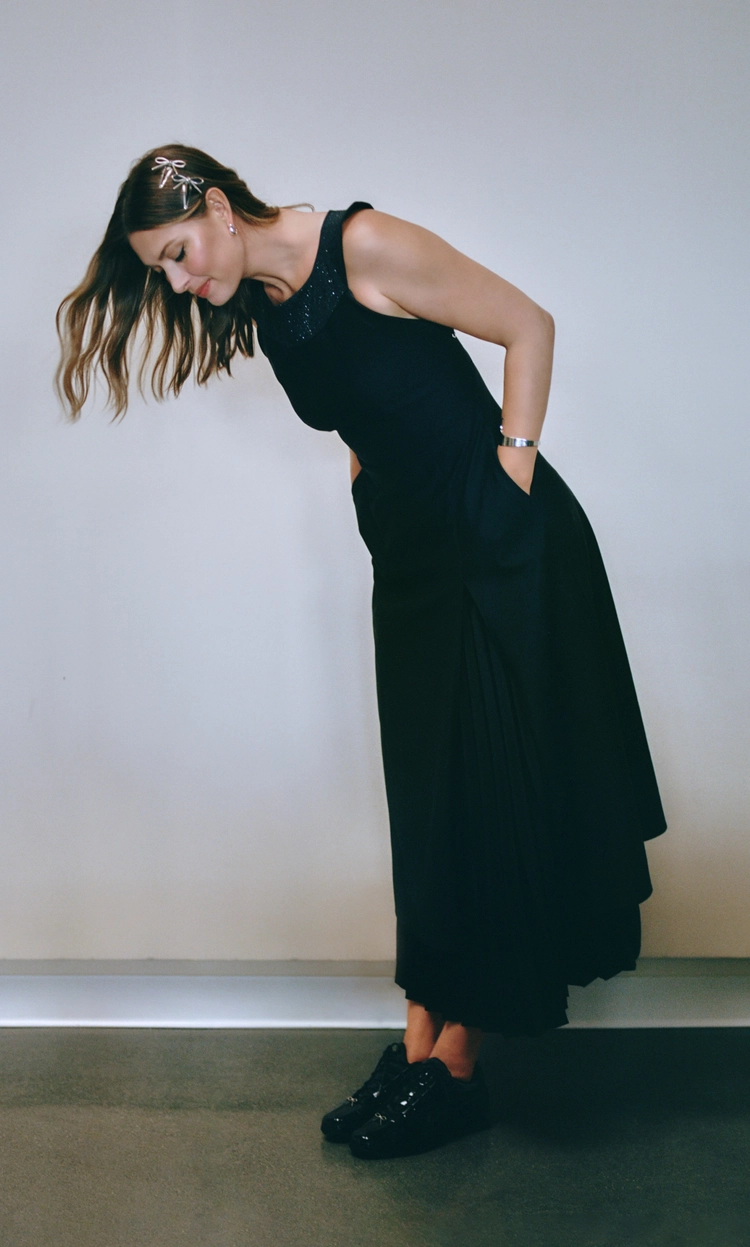
Almost two decades later, Sharapova is once again stepping onto the stage in a black dress — this time not to compete, but to be inducted into the International Tennis Hall of Fame. To honor the moment, Nike reimagined the original design, keeping its essence but adapting it for a more formal celebration.
The updated version maintains the sleek silhouette, shimmer, and neckline, while adding a longer hemline and pleated skirt. Unique personal details make the look even more meaningful: five stars representing Sharapova’s Grand Slam titles, a jacket fastened with a button designed from her son’s birthday, a metallic hairpiece, a wraparound Swoosh bracelet, and a custom version of Nike’s upcoming Shox Z sneaker.
“We wanted people to remember the original, but evolve it for today,” says Lotti. “Maria isn’t competing this time — she’s being celebrated.”
For Sharapova, the redesign sparked memories of what that first dress meant. “It was such a pivotal moment,” she explains. “The dress made me feel confident and free to move, but also elegant and strong. It was both athletic and stylish — an extension of who I was.”
That duality still defines her approach today, both on and off the court. As a mother, entrepreneur, and former champion, she gravitates toward timeless pieces that balance confidence, comfort, and identity. “I think there’s something powerful about having that one piece that makes you feel completely yourself. This dress has always been that for me.”
Back in 2006, the little black dress did more than catch attention — it challenged stereotypes about what athletes could wear and how they could present themselves. Lotti sees that as a pivotal breakthrough: “Playing in that dress, Maria was both powerful and graceful. It showed you could be more than one thing at once.”
For Nike, moments like this reflect its philosophy of pushing boundaries. “The best work happens when we try something that’s never been done,” Lotti says. “That’s when athletes are elevated and sport itself evolves.”
Ultimately, the dress — then and now — represents more than just fashion. It symbolizes Nike’s enduring partnership with Sharapova, rooted in shared ambition and legacy.
“Our athletes are family,” Lotti says. “Their dreams become our dreams. We’re with them through the quiet moments and the big ones — including this.”